The Postcode Stylist: Your Ends Already Chose Your Fit

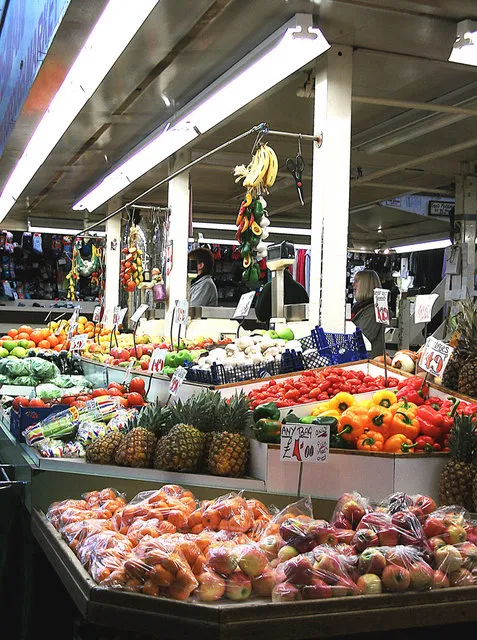
Photo: John M , CC BY-SA 2.0, via Wikimedia Commons
You can see the border before anyone tells you where it is. It's the point where the same black tracksuit stops being a flex and starts being a warning. Where the trainers that got compliments on one side of the ring road get a look on the other. Where a jacket that reads 'sound' on your estate reads 'try-hard' in the next town. Britain's style map is not a neat grid of cities and regions. It is a patchwork of tiny territories, each with its own dress code, its own heroes, its own cringe.
The bus stop is the front row
Fashion media loves a national mood. It wants to tell you what 'Britain' is wearing, as if the whole country wakes up and reaches for the same rail. That's not how it works. Kids don't get dressed for a nation. They get dressed for a route: the walk to the bus stop, the queue at the corner shop, the bench outside the rec, the school gate. That is where outfits are graded. Not by a stylist with a mood board, but by people who know exactly who you are and what you wore last Tuesday.
On one estate, a bright puffer is confidence. Two miles away, it is loud in the wrong way. A particular trainer might be the price of entry in one postcode and an instant marker of outsider energy in another. A haircut can carry more info than a caption. None of this is random. It is local knowledge, passed around faster than any trend report and enforced with a look rather than a rulebook.
Rivalry does half the styling
A lot of UK street style is built on a simple, petty, brilliant principle: if they wear it, we don't. Not because the brand is bad. Not because the fit is wrong. Because it belongs to them. The next postcode over has adopted it, so it's dead. Or the school down the road has claimed it, so it's contaminated. Local rivalry is one of the most underrated creative forces in British fashion. It forces invention. It makes kids remix, reject and reinvent. It turns a normal item into a statement simply by moving it across a boundary.
This is why national trend pieces often miss the point. They see a brand going viral and assume it's winning everywhere. In reality, it might be winning on one estate, getting laughed at in the next town and being worn ironically three miles away. The internet gives everyone the same options. The postcode gives those options consequences.
The algorithm can't read your ring road
Social media is brilliant at showing you what exists. It is useless at telling you what it means where you live. A feed can serve you the same drop, the same haul, the same silhouette to a kid in Croydon, a kid in Salford and a kid in Cardiff. But those kids are not styling in a vacuum. They are styling in front of siblings, mates, rivals and the older lot who still remember what certain looks used to signal.
That local edit is where the real style happens. A global brand gets adopted, stripped back, mismatched, covered in badges, paired with something daft from a charity shop, or worn so plainly it becomes a uniform. The algorithm flattens. The estate edits. The high street may stock the same rails nationwide, but meaning is made on the pavement.
Belonging has a dress code, and it isn't always fair
There is a romantic version of this story where local codes are pure creativity and community. Sometimes they are. They can make kids feel seen, give them a language, help them find their people without saying a word. A good local scene can be more inclusive than any brand campaign. It can make room for the weird kid who knows how to layer, the quiet kid with the perfect coat, the one who turns a schoolbag into the whole outfit.
But local codes can also be tight. They can police. They can make a kid feel like they are failing an exam they never sat. The answer isn't to pretend that pressure doesn't exist, or to replace it with a national uniform designed by a boardroom. The answer is more room to move. Clothes should be a door, not a bouncer. STIGMA isn't interested in handing down a new set of rules from on high. We're interested in what happens when people take the rules and bend them.
The same jacket means ten different things
A retail park in one town is basically a retail park in another. Same chains, same lighting, same playlist. But the meaning of what you buy there changes the moment you wear it home. A £20 jacket can be a classic in one area, a joke in another, and a blank canvas three streets away. A pair of trainers can be school shoes, club wear, work wear or a warning, depending on the postcode attached to the feet.
That is why local scenes still matter more than most trend forecasts admit. They are not passive consumers of whatever drops. They are editors, critics and collaborators. They decide what gets kept, what gets mocked and what gets made new. The most honest fashion map of Britain isn't in a magazine. It's in the routes kids take home.
Wear the label, but know the postcode
STIGMA was built for people who don't fit the default. But the default isn't the same everywhere. In one town, defying the norm means wearing something louder. In another, it means wearing something quieter. In one postcode, the rebellious move is a logo. In the next, it's refusing one. The brand can make the clothes. It can't make the meaning. That belongs to the wearer, the street, the bus stop and the kid who decides to ignore the usual code just enough to make it interesting.
So before you ask what's trending in Britain, ask what's acceptable at the end of your road. Then ask yourself whether you're dressing for the map or redrawing it. The real fashion map is drawn in pencil, block by block, and it gets rewritten every time someone leaves the house. No app can tell you where you stand. Your postcode already did.