The Copy Knows What the Original Costs
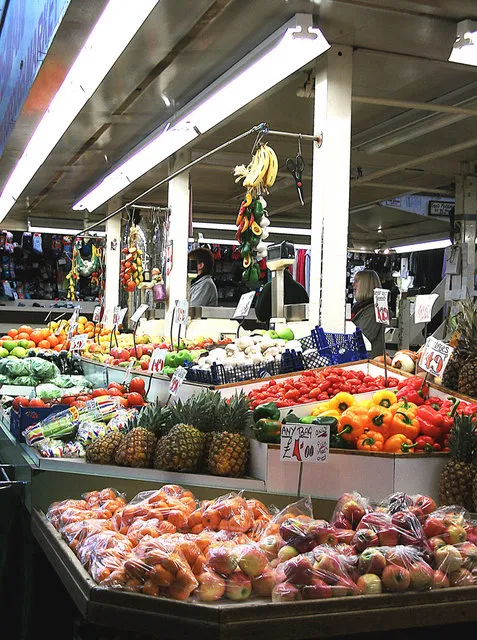
Photo: michael ely , CC BY-SA 2.0, via Wikimedia Commons
There's a rail at a provincial market somewhere between the phone cases and the fruit-and-veg. A puffer jacket hangs there for £25. The logo is slightly wrong. The stitching is doing its best. The kid holding it up to the mirror isn't stupid — they know it's not the real thing. They also know the real thing costs more than their rent. And that gap, the one between wanting to look like you belong and being priced out of the room, is where Britain's dupe economy actually lives.
Let's get the obvious out of the way: counterfeiting is not a folk hero. The trade is tangled up with organised crime, exploitative labour and small designers having their work nicked before they've made a penny back. None of that is cute, and none of it should be glamorised. But the sneer aimed at the buyer is a different thing entirely. It's rarely about ethics. It's about class, dressed up as quality control.
The Market Stall Is a Classroom
A £600 jacket isn't just a jacket. It's a membership card. It says you can afford to be casual, that your 'effortless' look came with a receipt. When a teenager from a council estate turns up in a copy of that jacket, the offence isn't the fake logo. It's the audacity. They've skipped the queue. They've refused to accept that the look was reserved for people with better postcodes and patient credit cards.
That's why the market stall matters. It's not a temple of authenticity; it's a crash course in how fashion actually works. You learn quickly that the difference between a £25 jacket and a £600 jacket is often not £575 worth of fabric. It's marketing, scarcity, a shop assistant with a headset and a queue outside. The copy exposes that. It's honest about the con in a way the original can never afford to be.
Depop and the Performance of Provenance
Online, the same story plays out with better lighting. Depop and Vinted are full of listings that swear blind something is 'authentic vintage' because it has a label and a story. Provenance has become a personality trait. People ask for receipts, tags, proof of purchase. Fair enough — nobody wants to be ripped off. But there's a fine line between wanting your money's worth and turning authenticity into a border checkpoint.
In 2026, the 'dupe' has its own language. TikTok hauls, 'inspired by' pieces, 'almost identical' cargos. The dupe doesn't pretend to be the original; it just admits that desire is democratic. The fake tries to fool you. The dupe just says: you liked the look, here's a version you can afford. That's not a crime against fashion. It's a response to a market that has spent decades telling ordinary people they're not invited.
The Stigma Is the Point
The stigma around fakes isn't really about stitching. It's about who gets to be seen. School blazers, trainers, bags, phone cases — the same kids who get laughed at for a fake logo are suddenly praised for 'street style' when a brand decides to borrow the look for a runway. The insult travels one way. The inspiration travels the other.
This is the bit the moral panic misses. When newspapers run stories about 'counterfeit culture', they're rarely worried about the factory worker or the small designer. They're worried about the boundary. They're worried that the wrong people are getting through the door. Class disgust has always been good at wearing a trench coat and calling itself quality control.
What the Copy Confesses
A copy confesses something the original would rather you didn't hear: the price is not the point. The price is the gate. The original's value is partly craft, sure, but it's also scarcity, hype and the promise that most people can't have it. The copy strips that away. It says the look was never magic. It was just expensive.
That doesn't mean every dupe is ethical. It doesn't mean every fake is a victimless bit of rebellion. It means the outrage is misdirected. If we actually cared about originality, we'd protect small designers, pay garment workers properly and stop letting fast fashion giants copy independent labels without consequence. Instead, we save our harshest judgment for the kid in the market queue.
Belonging Shouldn't Be a Luxury Item
At STIGMA, we're not in the business of selling you authenticity as a certificate. Wear the label. Defy the norm. But a label is a tool, not a personality. The real rebellion isn't in pretending your copy is real. It's in refusing the idea that belonging should come with a price tag designed to keep you out.
If the doorway costs £600, build your own door. The copy already knows what the original costs. The question is why we keep pretending that's fair.