Printed in the Wrong Font, Worn for the Right Reasons
There is a specific sneer saved for the bootleg band tee. It comes from two directions at once: the merch-table purist who paid £45 for the official print, and the fashion gatekeeper who can smell an unlicensed garment through a screen. Both of them miss the point. The bootleg isn’t a failed copy of the real thing. It’s a different object entirely — a love letter written in the wrong font, on cheaper cotton, because that was what the writer could afford.
The tenner that says more than a receipt
Official merch is a transaction. You queue, you tap your card, you leave with a receipt and a shirt that proves you were there, or that you were online at the right moment, or that you had enough disposable income to care. The bootleg is a translation. It says: I couldn’t get to the show, I couldn’t afford the drop, I wasn’t born yet, but this sound is mine now.
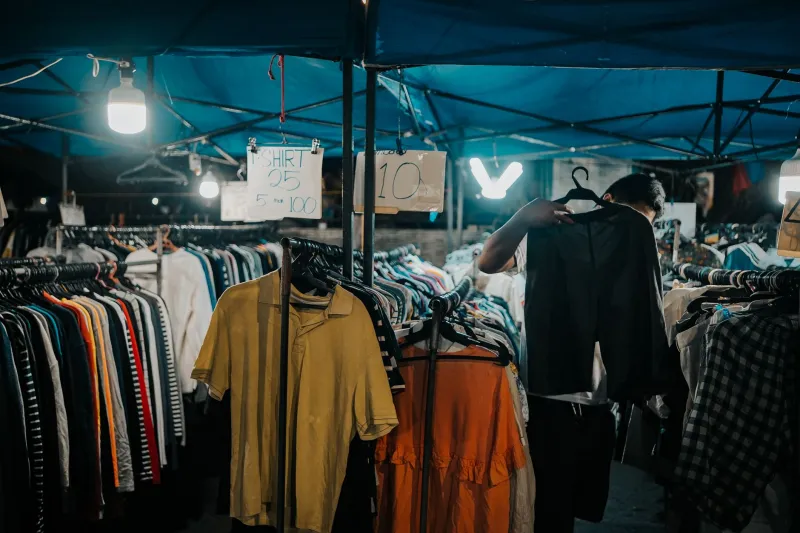
That distinction matters. In the UK, the bootleg band tee has always lived in the same ecosystem as market stalls, car-boot sales and the bloke at the back of the venue with a bin bag full of prints. It’s a working-class archive. Camden, Afflecks in Manchester, Birmingham’s Rag Market, the Barras in Glasgow — these are not lesser fashion spaces. They’re where subculture actually gets distributed. A fiver and a bit of nerve can buy you into a world that otherwise wants £60 and a booking fee.
A fake shirt can be a truer flag
The fashion world loves to talk about authenticity, usually while selling you a faded reissue of something it once called ugly. Bootlegs get treated as a stigma because they are unpoliceable. They aren’t official, they aren’t licensed, they aren’t approved by a label’s legal team. But a bootleg band tee isn’t pretending to be official. It’s a fan-made object. It’s a kid with a printer, a market trader with a supplier, a TikTok seller reprinting a blurry scan of a shirt from 1991. The intention is not deception. The intention is devotion.
And devotion is often more honest than proximity. Wearing a shirt for a band you never saw isn’t a lie. It’s a claim on a lineage. You might have found the band through a parent’s CD wallet, a YouTube algorithm, a friend’s older sibling, a playlist called something unhinged. The shirt says you did the work. You listened, you read, you borrowed, you obsessed. The official tee says you were there. The bootleg says you wish you had been, and you’re not going to let a lack of money or time or geography stop you from saying so.
The market stall is a curriculum
There’s a reason bootlegs often look slightly off. The logo is stretched. The spellings wobble. The dates are wrong. The image is a fifth-generation copy of a copy. That’s not a bug; it’s the fingerprint of the thing. A perfect bootleg is just a counterfeit. A rubbish bootleg is folk art. It tells you where it came from: a stall, a suitcase, a bloke who knows a bloke, a printer running hot in a back room.
The TikTok reprint economy has changed the surface of it, but not the logic. Now you can order a bootleg band tee from a phone and have it arrive in three days, wrapped in plastic, with a tracking number. That’s faster, but it’s not necessarily better. The car-boot version carried a story. You had to find it. You had to haggle. You had to ignore the fact that the neckline was already borked. The shirt was a souvenir of a Sunday morning, not a checkout confirmation.
Why fashion still calls it a stigma
Luxury fashion has spent decades borrowing from the bootleg aesthetic while keeping the bootleg makers at arm’s length. It calls the same impulse ‘reappropriation’ when it does it and ‘counterfeiting’ when someone else does. That’s not about quality control. It’s about who gets to profit from devotion. The stigma attached to bootlegs is really a stigma attached to class, to unlicensed creativity, to kids making their own culture because the official version was priced out of reach.
At STIGMA, we’re not interested in that hierarchy. A shirt is not holy because it was sanctioned. It’s holy because someone chose to wear it until the print cracked. The bootleg band tee is a refusal to wait for permission. It’s a badge of belonging that says the music mattered more than the paperwork. So wear the wrong font. Wear the misspelled logo. Wear the shirt for the band you never saw, and wear it like you were in the room.