Britain's Favourite Insult Has a Zip and a Logo

Photo: Аркадий Зарубин, CC BY-SA 3.0, via Wikimedia Commons
Say the word 'chav' out loud and watch who flinches. Not the person in the tracksuit — they've heard it before. It's the person who said it, suddenly aware they've revealed something about themselves. Because 'chav' was never a neutral description. It's a class slur dressed up as style criticism. And the uniform it polices is almost always the same: a zip, a logo, a pair of gold hoops that catch the light just right.
A slur with a sportswear label
Let's be clear about what's actually being insulted when someone sneers at a tracksuit. It isn't the polyester. It isn't the fit. It's the suggestion that the wearer might not have the money to perform 'good taste' — or, worse, that they don't want to. The gold hoops, the branded sportswear, the fresh Air Max: these aren't random choices. They're signifiers that have been deliberately coded as common, as cheap, as something to be ashamed of. Tabloids spent the 2000s building an entire moral panic out of it. Little Britain gave it a catchphrase. School corridors gave it detentions. But the joke was always punching down.
What's interesting is how little the criticism has to do with the clothes. Swap the tracksuit for a linen co-ord and the same person gets called 'effortless'. The garment doesn't change the class position. It just hides it better. Policing 'chav' style has never been about aesthetics. It's about keeping a hierarchy intact — making sure the wrong people know they're the wrong people.
The school gate's quiet class war
If you want to see this play out in real time, stand outside any UK secondary school at 3pm. The rules are never just about uniform. They're about who gets pulled up for hoop earrings and who gets away with a nose stud. Who gets sent home for trainers and who gets a quiet word about a skirt length. The language is always 'neat', 'smart', 'appropriate' — but the subtext is 'not like them'.
In 2026, plenty of schools still ban branded sportswear outright. They'll tell you it's about safety or standards. But walk through the gates on non-uniform day and you'll see the same kids who get detention for a Nike hoodie being praised for a vintage blazer that costs five times as much. The message lands early: your clothes are a problem if they're read as working-class, and a personality if they're read as curated.
That's the class war in miniature. It's not fought with fists. It's fought with detentions, dress codes and the quiet certainty that some kids should know better.
Resale's selective memory
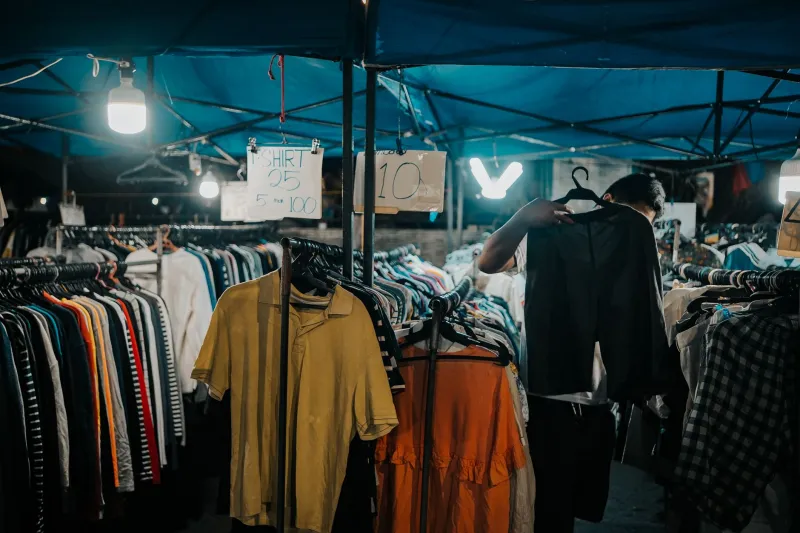
Here's where it gets properly hypocritical. Open any resale app in 2026 and you'll find the exact same garments that got kids excluded from school being sold as 'vintage', 'Y2K' and 'council estate chic'. A tracksuit that was 'chavvy' on its original owner becomes 'archive sportswear' the moment it's photographed on a wooden hanger in a Shoreditch flat. Gold hoops that were 'tacky' at the school gate are now 'quiet luxury' on a fashion week front row. The look hasn't changed. The seller has.
This isn't a new phenomenon — Britain has been recycling working-class style as high fashion for decades. But there's something especially galling about watching it happen in real time, with the original wearers still being priced out of the conversation. The same platforms that mock 'chavs' are the ones profiting from their wardrobes. It's a neat trick: take the clothes, leave the stigma, charge a premium for the aesthetic while keeping the class contempt firmly in place.
The stigma flip
So what do we do with a label that was designed to put us down? We wear it. Loudly. Not as a costume, not as irony, but as a refusal to apologise for existing in the clothes we actually like. The tracksuit was never the problem. The problem is a culture that needs someone to look down on so it knows where it stands.
Reclaiming 'chav' style isn't about pretending the insult never hurt. It's about recognising that the people who used it were never the authority on taste. They were just the ones with the loudest voices and the least to lose. In 2026, the kids who got sent home for their hoops are the ones setting the agenda. The resale market knows it. The fashion week stylists know it. The school gate is just catching up.
At STIGMA, we're not interested in asking permission. We're interested in the flip — the moment a slur becomes a signature. A zip, a logo, a pair of gold hoops: wear them like you mean it, because you do. The people who sneer are revealing more about themselves than they'll ever know about you.