Mud, Masks and Middle Fingers: The Kids Still Dressing Against the Festival
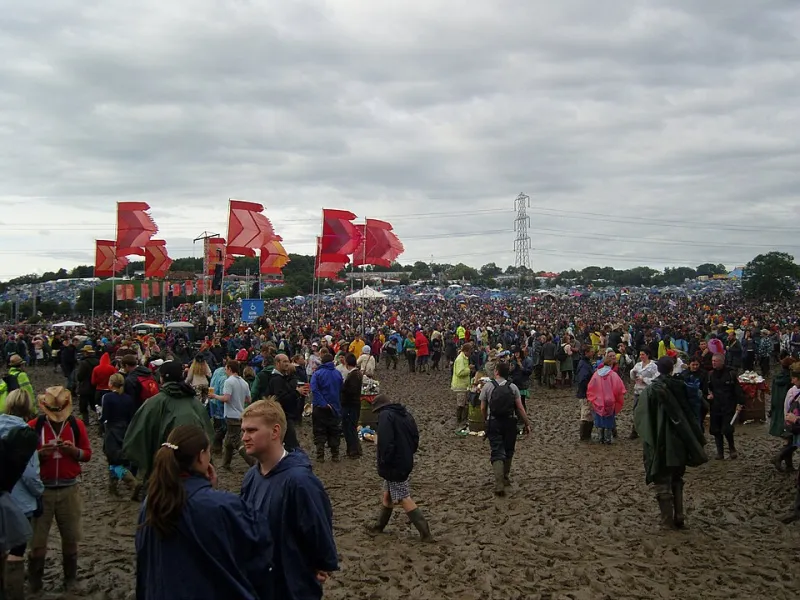
Photo: Hilary Perkins, CC BY-SA 2.0, via Wikimedia Commons
There's a photo that does the rounds every August. Reading Festival, sometime in the late nineties. A crowd of teenagers caked head to toe in mud, bin bags worn as capes, one lad in the front row grinning through a face of dirt like it's war paint. Nobody in that photo dressed for Instagram. Nobody in that photo dressed for anyone but each other. Compare it to a festival field in 2024 and something's gone missing — and it isn't just the mud.
The Great Flattening
Somewhere along the line, UK festival fashion got sanitised. Walk through Reading or Leeds these days and you'll pass hundreds of identical outfits: the same bucket hats, the same cargo co-ords, the same fast-fashion 'festival edit' bought on next-day delivery and destined for a skip by Tuesday. Boomtown, which built its whole identity on immersion and alter-egos, now has its fair share of lads in matching bucket hats who look like they've wandered in from a lads' holiday to Zante.
How did we get here? Partly it's the algorithm. Festival fits are content now, shot for TikTok weeks before the gates open. When your outfit's audience is millions of strangers rather than a few thousand mates in a field, you dress safe. You dress in what's already been validated. The result is a flattening — a national festival uniform with all the rebellion of a supermarket meal deal.
Partly it's the sponsors. When your stage is branded like a Formula One car, there's a quiet pressure to look consumable. Chaos is bad for business. Mud doesn't photograph well next to a logo.
What We Lost
The old festival look wasn't a look at all — it was evidence. Battle jackets sewn with patches from every gig you'd survived. Dr. Martens scuffed to buggery because you'd actually been in the pit. Everything worn told you where someone had been and what they'd stood for. Goth, metalhead, raver, crust — you could read a whole biography off someone's back before the first band played.
That's the thing the co-ord crowd replaced. Not a style, but a story. Fast fashion gave everyone a costume; subculture gave people a history.
The Ones Who Won't Blend
But here's the good news: they're still out there. Every major festival has its holdouts — the kids who treat the campsite as a runway for everything the sponsors would rather they didn't wear.
Meet them at the edge of the field. There's Leah, 18, from Sheffield, who spent four months hand-stitching a battle jacket covered in patches from DIY shows and her late dad's old band tees. "People ask where I bought it," she says. "That's the whole point. You can't."
There's the crew who turn up to Boomtown in handmade masks — papier-mâché, wire, scrap fabric — faces they built themselves because a bought identity felt like a lie. There's the Leeds lot in full goth kit in a heatwave, black on black on black, sweating through it because toning it down was never on the table.
None of them are dressing for the algorithm. They're dressing for each other, and for the version of themselves they want to spend the weekend being. Which is, quietly, the most rebellious thing you can do at a festival in 2024.
How to Get It Back
You don't need a trust fund or a stylist. You need a decision. Dig out the jacket with the patches. Customise something — rip it, stitch it, paint on it. Buy less and mean more. If your festival fit could be worn by literally anyone in the queue, you've wasted a perfectly good weekend to be somebody.
The mud was never the point. The point was that festivals used to be where you got away with being yourself, loudly, in front of thousands of people. The bucket hat crowd rented their look. The masks and battle jackets built theirs.
Wear the label. Defy the norm. Even if the norm has a sponsor.


